
AI Perfection vs Human Imperfection: The Good, the Bad, and the Uncomfortable Truth
Opening Quote
“Perfection is attractive… until you realize the world was never designed to run on it.”
For centuries, humanity has built machines to eliminate mistakes. From calculators to autopilot systems, the goal has always been the same: reduce human error.
Artificial Intelligence is simply the newest chapter in that pursuit.
But here’s the provocative question no one asks often enough:
If AI achieves near-perfect decision-making, where does that leave imperfect humans?
The conversation isn’t just about technology anymore. It’s about philosophy, economics, ethics, creativity, and identity.
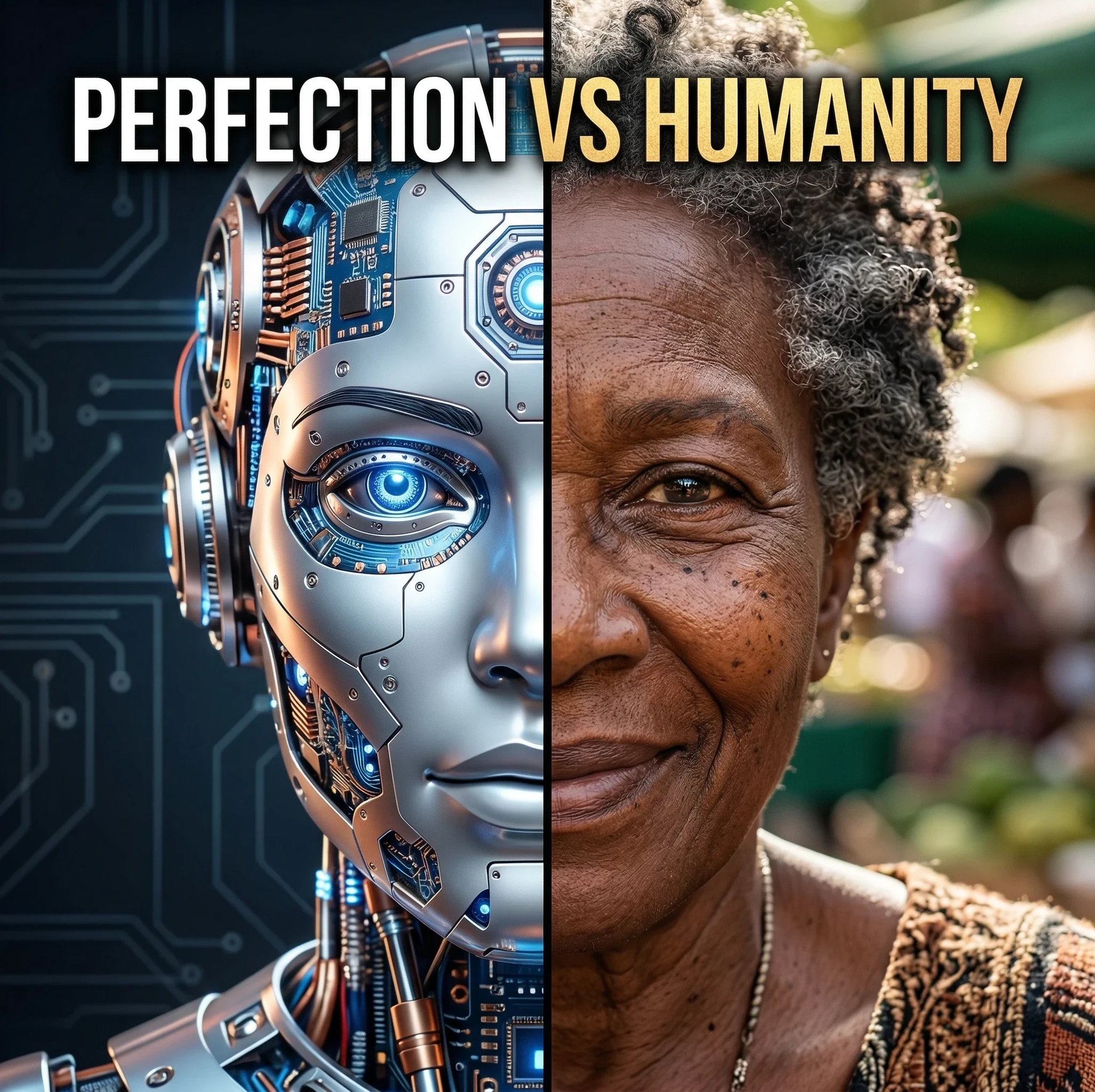
AI promises efficiency, consistency, and precision. Humans bring intuition, empathy, and imagination.
So the real question isn’t AI vs Humans.
It’s what happens when perfection meets imperfection.
Understanding AI “Perfection”
When people talk about AI perfection, they usually mean precision and consistency.
AI systems can:
- Analyze millions of data points in seconds;
- Detect patterns invisible to humans;
- Operate continuously without fatigue; and
- Execute tasks with consistent accuracy
For certain functions, AI is already outperforming humans.
Examples include:
- Medical imaging diagnostics;
- Fraud detection in banking;
- Supply chain optimization; and
- Weather forecasting models
AI doesn’t get tired, it doesn’t forget and it doesn’t have bad days.
But that certainly doesn’t mean it’s perfect.
Human Imperfection: The Secret Ingredient
Humans make mistakes constantly.
We forget things, misinterpret information, and we make emotional decisions.
Yet those imperfections create something machines struggle to replicate.
Human beings:
- possess intuition;
- possess moral reasoning;
- we possess empathy;
- creativity; and
- we possess contextual judgment
Human imperfection throughout history has often lead to innovation.
Many breakthroughs came through accidents, curiosity, and even flawed experiments.
Examples include:
- Penicillin;
- Post-it Notes; and
- Microwave ovens.
None were planned perfectly. they were discovered imperfectly.
The Good: Where AI and Humans Work Together
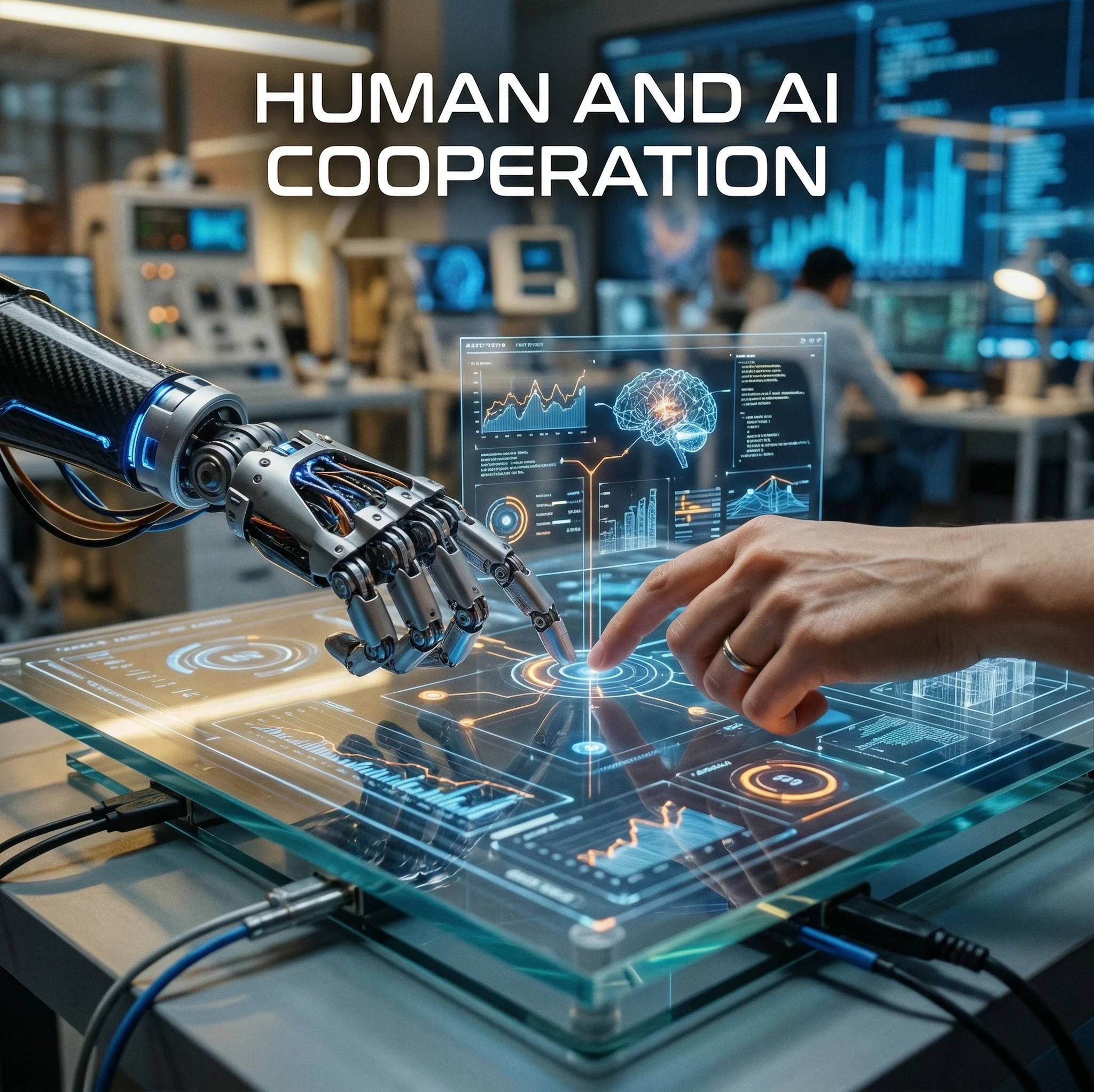
The most productive future is collaboration, not competition.
AI excels at:
- data analysis;
- pattern recognition;
- repetitive processing; and
- in predictive modeling
Humans excel at:
- strategy;
- ethics;
- empathy; and
- in creative thinking
Together they create augmented intelligence.
For example:
In Medicine:
Doctors use AI to detect early cancer signals in scans.
However, the doctor still interprets results, communicates with patients, and makes final decisions.
In Finance:
AI detects suspicious transactions instantly.
But, humans still investigate context and are required to determine intent.
In Education:
AI can personalize learning paths, but teachers are still required to provide mentorship and emotional support.
The best systems, therefore are those which combine machine precision with human wisdom.
The Bad: Where AI Creates Real Risks
Despite impressive progress, AI carries significant challenges.
Bias in Data
AI learns from historical data, if the data reflects human bias, the AI will simply replicate it.
We have examples appearing in:
- hiring algorithms;
- facial recognition systems; and
- loan approval models
AI may appear objective, but it operates on historical data provided to it.
As such, it can only reflect the inherited biases of the past.
Overdependence
Another danger is automation complacency.
When people trust machines too much, critical thinking declines.
- Pilots, for example, rely heavily on autopilot systems.
In rare emergencies, manual flying skills may deteriorate.
Overreliance on AI can in the long run, weaken human expertise.
Economic Disruption
AI-driven automation is transforming the labor market.
Some roles have shrunk, some examples include:
- routine administrative work;
- basic coding tasks; and
- simple data entry
At the same time, new roles and job descriptions are emerging, such as:
- AI Engineers;
- Machine Learning Specialists;
- AI Ethics Advisors; and
- Automation Architects to name a few.
The workforce of Tomorrow will require continuous skill evolution.
The Ugly: Ethical and Social Questions
The most uncomfortable discussions involve power and responsibility.
Who is accountable when AI causes harm?
Is it:
- the developer;
- the company;
- the user; or
- the algorithm itself
AI also raises questions about human identity.
If machines outperform humans in:
- writing;
- art;
- coding; and in
- research
What becomes uniquely human?
These are not technical questions , they are in fact, civilizational questions.
The Job Market Reality
AI isn’t simply replacing jobs, it is reshaping roles.
Routine tasks disappear first, Strategic tasks become more valuable.
Workers increasingly take on roles as:
- System Managers;
- AI Supervisors; or
- Decision Validators.
The future worker role becomes less of a task executor and more of a problem solver and orchestrator.
Future Trends to Watch
1. Human-AI Collaboration Platforms
AI assistants will become integrated into nearly every professional tool, not as separate apps, but as embedded co-pilots.
2. Ethical AI Governance
Governments and organizations will be required to implement:
- AI auditing systems;
- Algorithm transparency standards; and design
- New Regulatory Frameworks
Accountability will become a competitive advantage.
3. AI-Augmented Creativity
Creative industries will shift from creation to curation and direction.
Humans guide the vision, while AI accelerates production.
4. Emotional Intelligence as a Premium Skill
Ironically, the more intelligent machines become, the more valuable human empathy and emotional awareness will be.
Leadership will increasingly find itself relying heavily on human traits that machines cannot replicate.
How Humans Stay Relevant
To thrive in an AI-driven world, individuals would need to develop:
- Critical thinking – the process of actively analyzing, evaluating, and synthesizing information to form a reasoned judgment;
- Adaptability – the ability to adjust one’s behavior, mindset, or approach to effectively navigate new or changing circumstances ;
- Creative problem solving – a structured, intentional process for tackling complex challenges;
- Emotional intelligence –the ability to recognize, understand, and manage your own emotions while effectively perceiving and influencing the feelings of those around you ; and
- Ethical reasoning – the systematic process of evaluating moral dilemmas by weighing values, principles, and potential consequences to reach a justifiable decision on what is right or wrong.
The truth is that Machines can process information efficiently, but it is Humanity that provide meaning and purpose.
Books on:
- The deep work and focus – example is Deep Work: Rules for Focused Success in a Distracted World by Cal Newport,
- Artificial intelligence ethics – example – Algorithms of Oppression: How Search Engines Reinforce Racism by Safiya Umoja Noble
- The future of work – example – A World Without Work by Daniel Susskind; and
- human creativity – example – The Artist’s Way by Julia Cameron:
Affiliate Disclosure
Some links in this article may be affiliate links. If you purchase products through them, we may earn a small commission at no additional cost to you. This helps support the research and content creation behind this blog.
Amazon Affiliate Disclaimer
As an Amazon Associate, we earn from qualifying purchases. Product recommendations are based on relevance and educational value, not promotional influence.
Here’s a Thought as I Close
The debate about AI perfection versus human imperfection may actually be the wrong debate.
Perfection isn’t always progress, sometimes the most important breakthroughs come from curiosity, mistakes, and flawed thinking.
Machines may calculate faster, they may analyze deeper, and they may even simulate creativity.
But the future will likely belong to those who understand something deeper:
Perfection builds systems.
Imperfection builds civilizations.
And the real challenge ahead is not deciding whether AI should replace humans.
It’s deciding how much of our humanity we are willing to allowed to be automated.