
Opening Quote
“The industrial revolution replaced muscle. The AI revolution is replacing decision-making.”
For decades, artificial intelligence felt like a distant promise — something researchers talked about and science fiction dramatized.
Not anymore.
AI is now reshaping the global economy in real time.
Entire industries are reorganizing around algorithms. Companies are redesigning workflows around machine intelligence. Governments are racing to regulate technologies they barely understand.
And individuals are trying to answer a difficult question:
Where do humans fit in an economy increasingly powered by machines that can think?
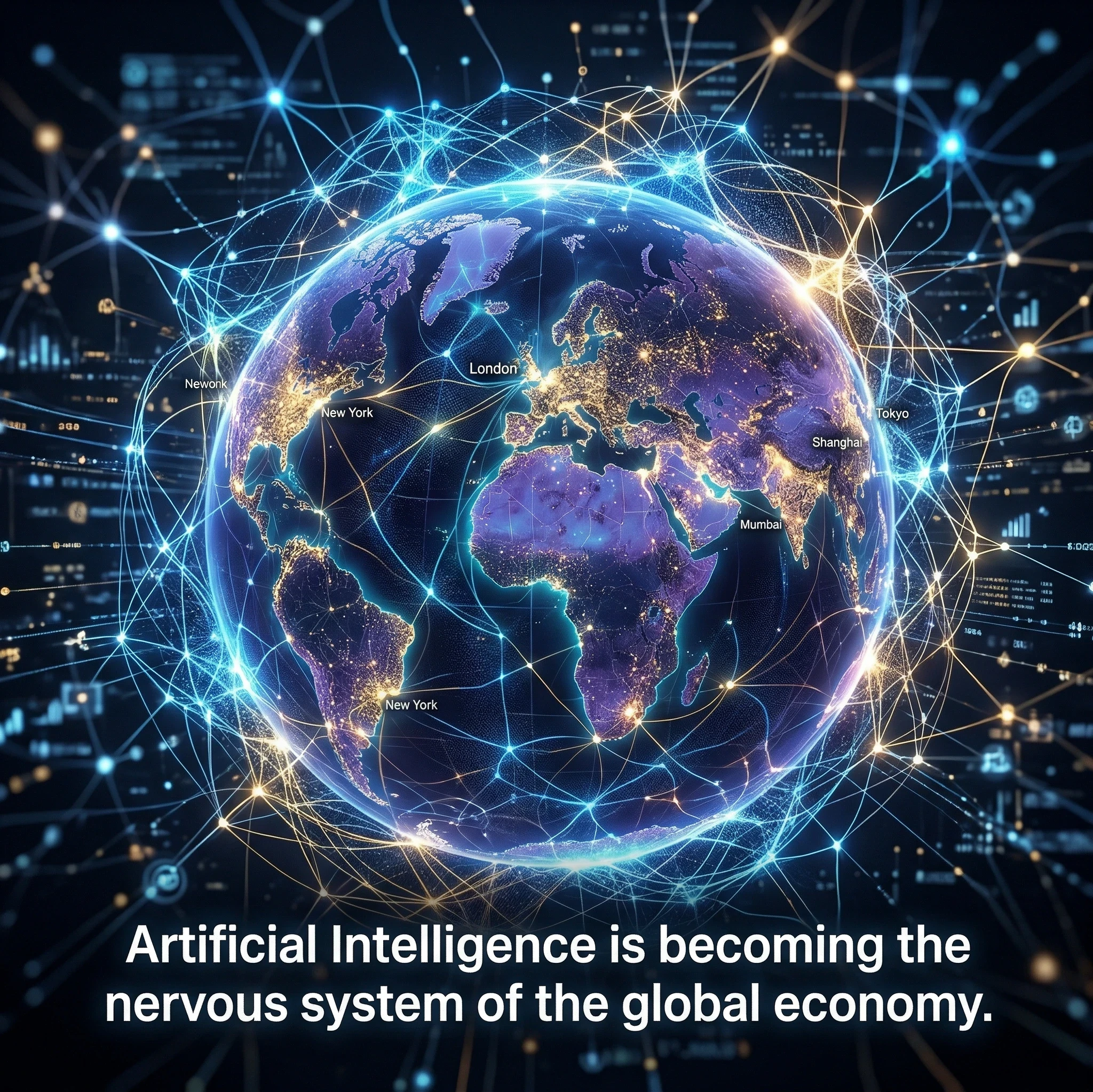
Welcome to the AI economy — a system where data, algorithms, and computing power are becoming the most valuable resources on Earth.
What Is the AI Economy?
The AI economy refers to an economic system where artificial intelligence technologies drive productivity, innovation, and decision-making across industries.
Instead of simply using machines for physical labor, modern organizations now use AI to perform:
- analyses;
- predictions;
- optimization;
- decision support; and
- automation
In short, AI is shifting economic power from those who own physical assets to those who control data and algorithms.
This transformation is already visible in several major areas.
The Three Pillars of the AI Economy
To understand how AI reshapes society, think of it across three dimensions:
Power;
Work; and
Wealth
These three forces are being fundamentally rewritten.
1. Power: Who Controls the Intelligence?
Economic power has always followed technological power.
During the industrial era, power belonged to those who owned factories.
During the internet era, power belonged to those who controlled platforms.
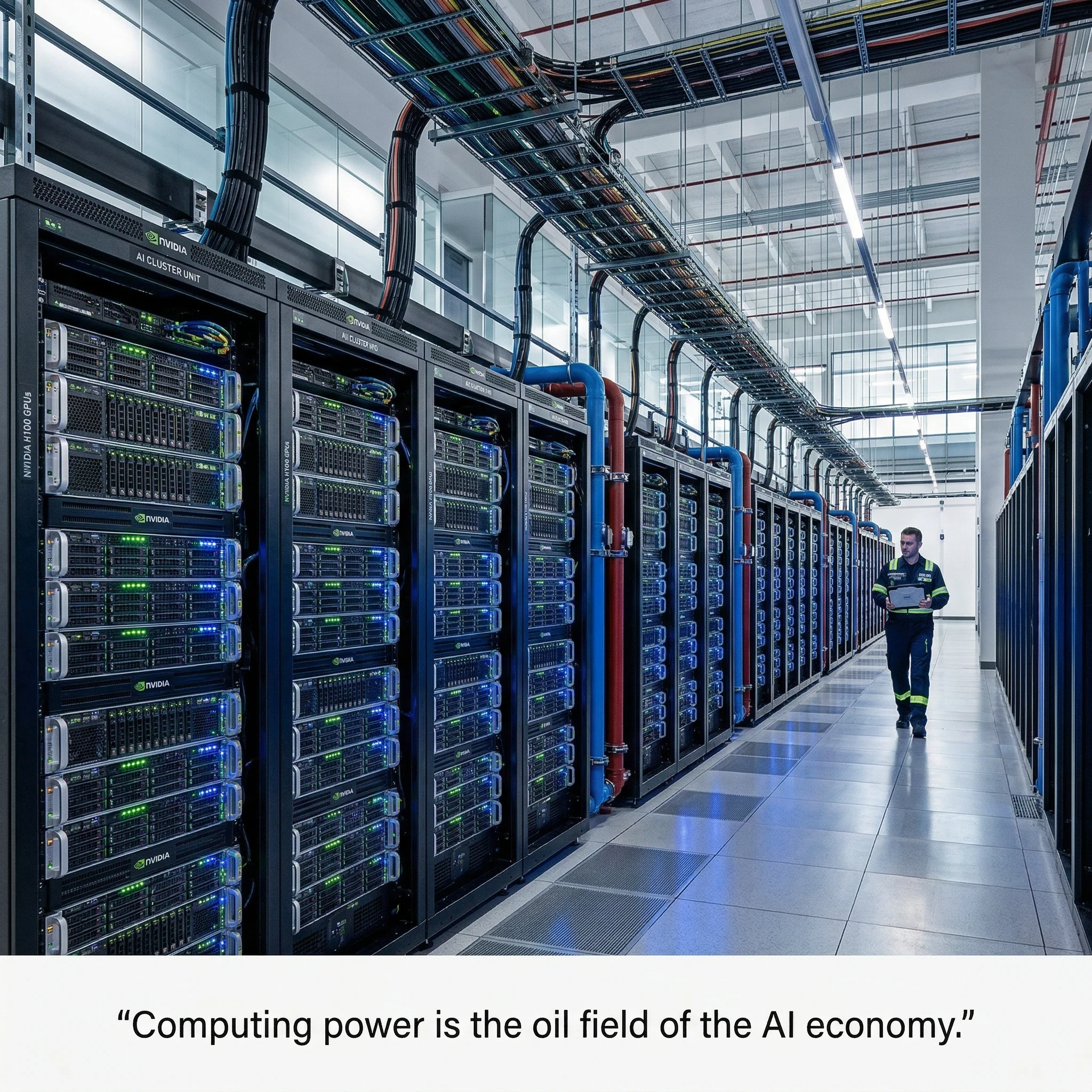
In the AI era, power increasingly belongs to those who control:
- massive datasets;
- advanced algorithms; and
- large-scale computing infrastructure
This concentration of capability explains why a small number of companies dominate the AI landscape, including:
- OpenAI;
- Google DeepMind;
- Anthropic;
- Microsoft; and
- Meta Platforms
These organizations possess the computational resources needed to train the largest AI models.
The result?
A new form of economic influence sometimes described as algorithmic power.
2. Work: The Reinvention of the Workforce
Few areas are experiencing more disruption than employment.
AI is not simply replacing workers — it is changing what work actually looks like.
Tasks once performed manually are increasingly handled by AI systems.
Examples include:
- data analyses;
- coding assistance;
- legal document reviews;
- medical image analyses; and
- logistics optimization
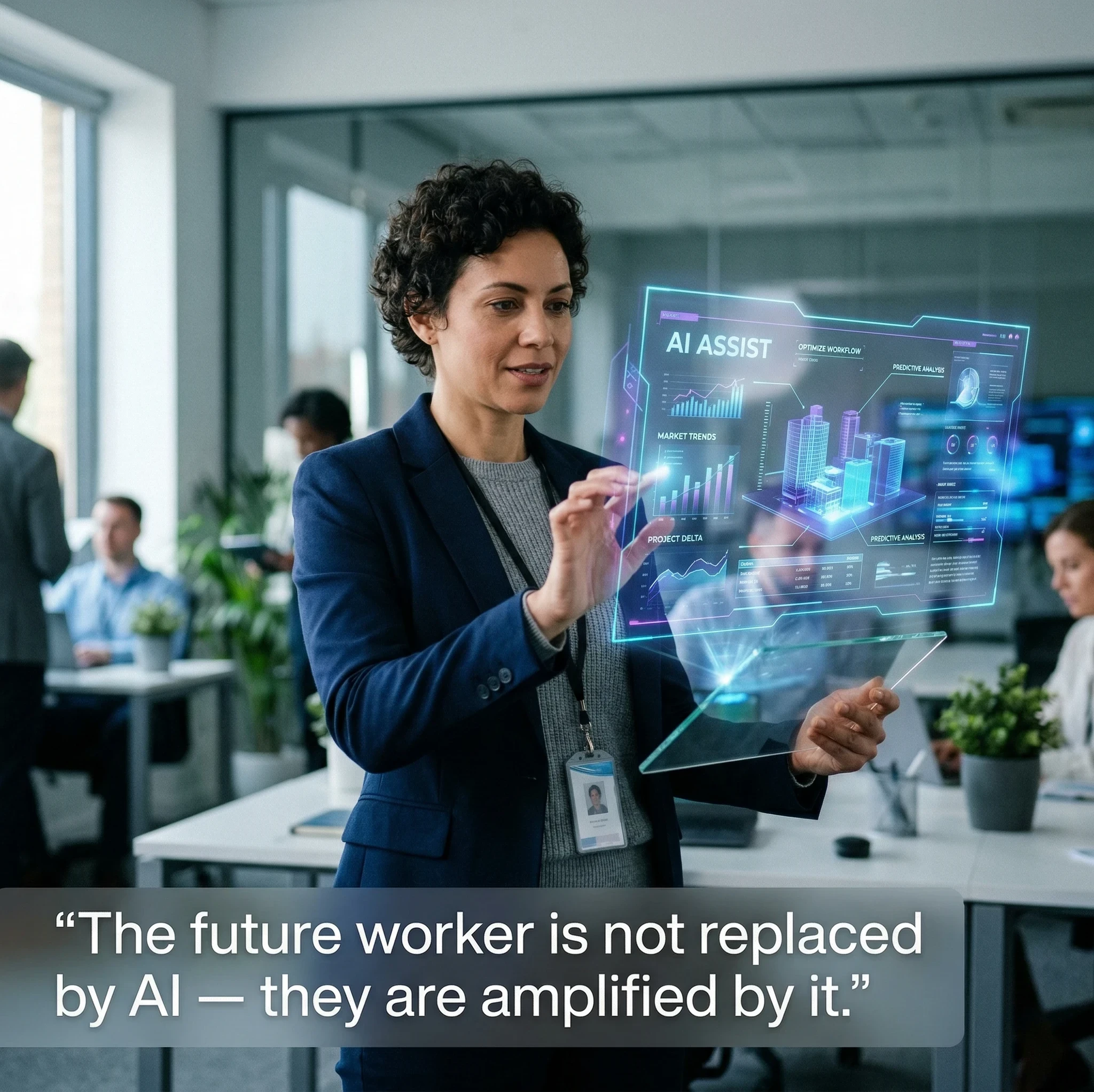
The result is a shift toward Human-AI collaboration.
Workers are increasingly expected to supervise, guide, and evaluate AI systems rather than perform every task themselves.
This trend is already creating new job roles such as:
- AI Engineers;
- Machine Learning Specialists;
- AI Ethics Analysts; and
- Prompt engineers
Professionals with strong AI integration skills are already commanding salary premiums between 25% and 35% in some sectors.
3. Wealth: The New Currency of Data
In the AI economy, wealth increasingly flows toward organizations that control information.
Data has become the raw material for intelligence.
Every digital interaction — searches, purchases, location signals, medical data, financial transactions — contributes to training smarter algorithms.
This creates a feedback loop:
- More data produces better AI;
- Better AI attracts more users; and
- More users generate even more data.
The companies that dominate this loop accumulate enormous economic advantage.
This phenomenon is sometimes referred to as the data network effect.
The Infrastructure Behind the AI Economy
AI does not operate in isolation.
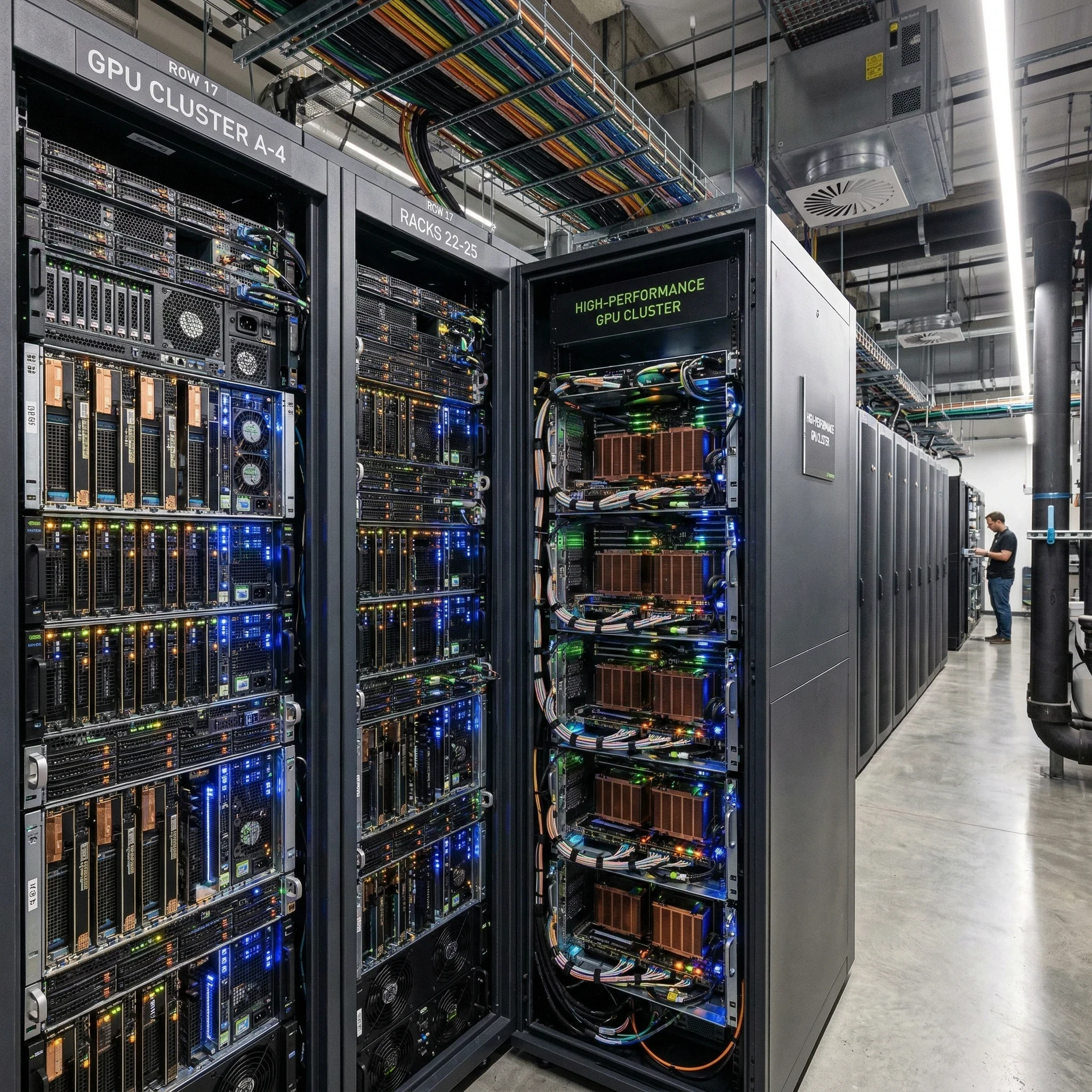
It relies on an enormous supporting ecosystem that includes:
- Data centers;
- Cloud computing platforms;
- High-speed networks; and
- Specialized AI chips
Companies such as NVIDIA have become essential to the AI supply chain by producing high-performance GPUs required for machine learning.
Without this infrastructure, large-scale AI systems simply would not exist.
The Good, the Bad, and the Ugly of the AI Economy
The Good
AI has the potential to unlock unprecedented economic productivity.
Benefits include:
- Accelerated scientific discovery;
- Improved healthcare diagnostics;
- Optimized energy usage;
- Smarter supply chains; and
- Enhanced productivity.
Entire industries may become more efficient as AI handles complex analysis in seconds.
The Bad
However, AI also introduces new economic challenges.
These include:
- Job displacement in certain sectors;
- Skill inequality;
- Data privacy concerns; and
- The concentration of technological power.
Workers who fail to adapt may find themselves competing against machines capable of performing many tasks instantly.
The Ugly
The most concerning possibility involves unregulated AI power.
If left unchecked, AI could amplify:
- Misinformation;
- Surveillance systems;
- Algorithmic discrimination; and
- Help create economic monopolies.
Responsible governance will play a critical role in shaping how the AI economy evolves.
The Future of the AI Economy (2026 and Beyond)
Looking forward, several trends are likely to define the next stage of AI development.
AI Infrastructure Expansion
Global demand for computing power will continue to grow rapidly as organizations deploy AI across industries.
AI-Augmented Decision Making
Executives will increasingly rely on AI-driven analytics to guide strategic choices.
Human-AI Collaboration
Workforces will increasingly consist of hybrid teams of humans and intelligent systems.
Regulatory Frameworks
Governments will introduce new rules to manage algorithmic accountability, transparency, and ethical AI development.
Where This Series Fits Together
This article is part of a broader AI thought-leadership series exploring how artificial intelligence is reshaping society.
You may also enjoy:
- AI Perfection vs Human Imperfection
- The Invisible AI Infrastructure
- The Great AI Job Shift
- Who Controls the Machines?
Together these articles explore the deeper implications of AI across technology, economics, and society.
Call to Action
Artificial Intelligence is no longer just a technology story.
It is an economic story, a workforce story, and a power story.
Understanding the AI economy may be one of the most important skills of the next decade.
Stay curious. Stay informed. And most importantly, stay adaptable.
Affiliate Disclosure
Some links in this article may be affiliate links. If you purchase through these links, we may earn a small commission at no additional cost to you.
Amazon Disclaimer
As an Amazon Associate, we earn from qualifying purchases.
Final Thought
Every technological revolution reshapes society.
The steam engine changed transportation.
Electricity changed industry.
The internet changed communication.
Artificial intelligence may change something even more fundamental:
Who makes the decisions that shape the future of humanity.
And the people who understand that shift early will be the ones best positioned to thrive in the AI economy.