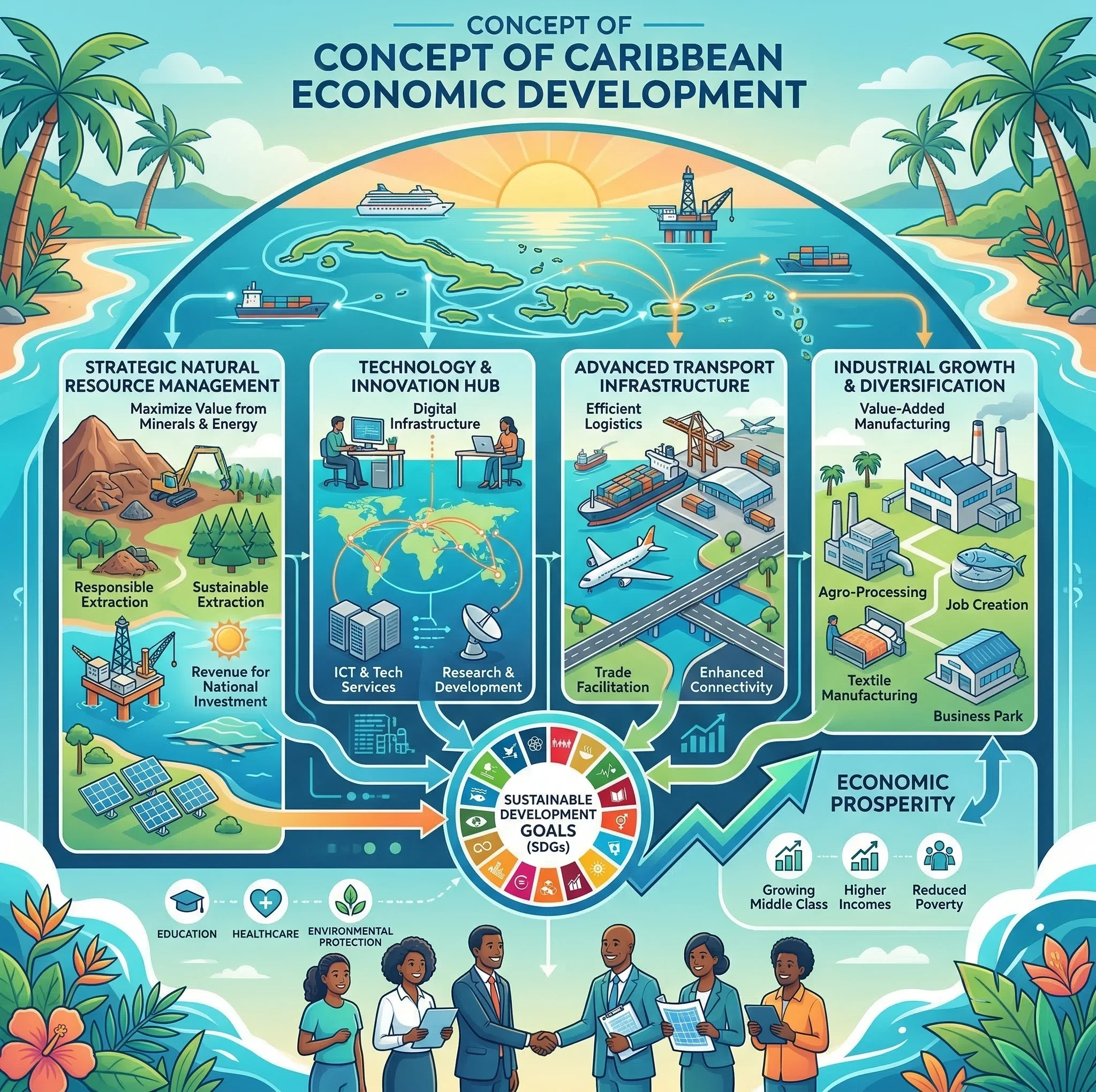
The Industrialization Level of the Caribbean: Challenges, Opportunities, and the Path Forward
Explore the level of industrialization in the Caribbean, the challenges facing regional manufacturing, and the policies and green energy initiatives shaping its economic future.
Introduction
When people think of the Caribbean, images of beautiful beaches, vibrant culture, and thriving tourism industries often come to mind. While tourism is indeed a major economic driver in the region, it also highlights a deeper structural reality: the Caribbean remains relatively under-industrialized compared with many other regions of the world.
The economies of most Caribbean nations are dominated by services—particularly tourism—while manufacturing and large-scale industry play a smaller role. This economic structure has created both opportunities and challenges for long-term development.
Understanding the industrialization level of the Caribbean helps explain why the region faces persistent issues such as high import dependence, limited manufacturing capacity, and vulnerability to global economic shocks.
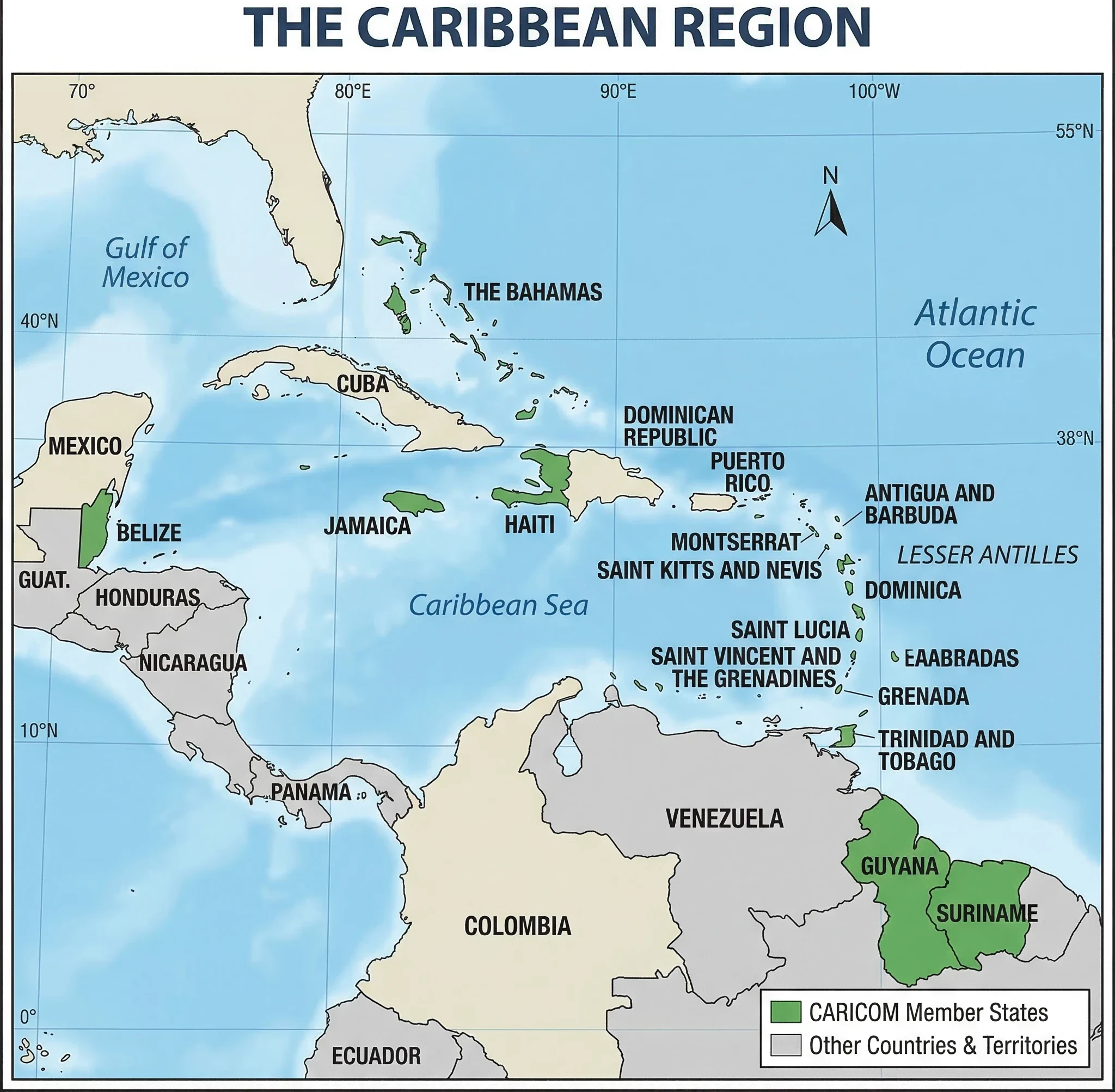
What Does Industrialization Mean?
Industrialization refers to the process by which an economy transitions from primarily agricultural production to manufacturing and industrial activities.
Key indicators of industrialization typically include:
- manufacturing output
- industrial contribution to GDP
- productivity levels
- export capacity
Highly industrialized economies tend to produce large quantities of manufactured goods and rely less on imports.
In contrast, many Caribbean economies remain service-oriented rather than manufacturing-oriented.
The Current Industrialization Level of the Caribbean
Across the broader Latin American and Caribbean region, industrial output represents only a modest share of global manufacturing activity.
As of 2024:
- Industry accounted for roughly 5.5% of global industrial value added
- Manufacturing accounted for about 5.0% of global manufacturing value added
These figures highlight the relatively small industrial footprint of the region within the global economy.
For many Caribbean countries, the service sector—especially tourism—remains the dominant source of economic activity.
Sectoral Dominance: Tourism Over Manufacturing
Tourism plays a central role in the economies of many Caribbean nations.
Countries such as:
- Barbados
- Jamaica
- Dominican Republic
rely heavily on visitor spending for national income and employment.
While tourism generates significant revenue, it can also create economic imbalances because:
- it is vulnerable to global crises
- it produces limited industrial spillover effects
- it does not significantly expand manufacturing capacity
This reliance on services partly explains why the region’s industrial development has progressed slowly.
Structural Differences Among Caribbean Economies
The level of industrialization varies significantly across Caribbean nations.
Some countries have developed specialized industries, while others remain heavily service-based.
Trinidad and Tobago: The Region’s Industrial Powerhouse
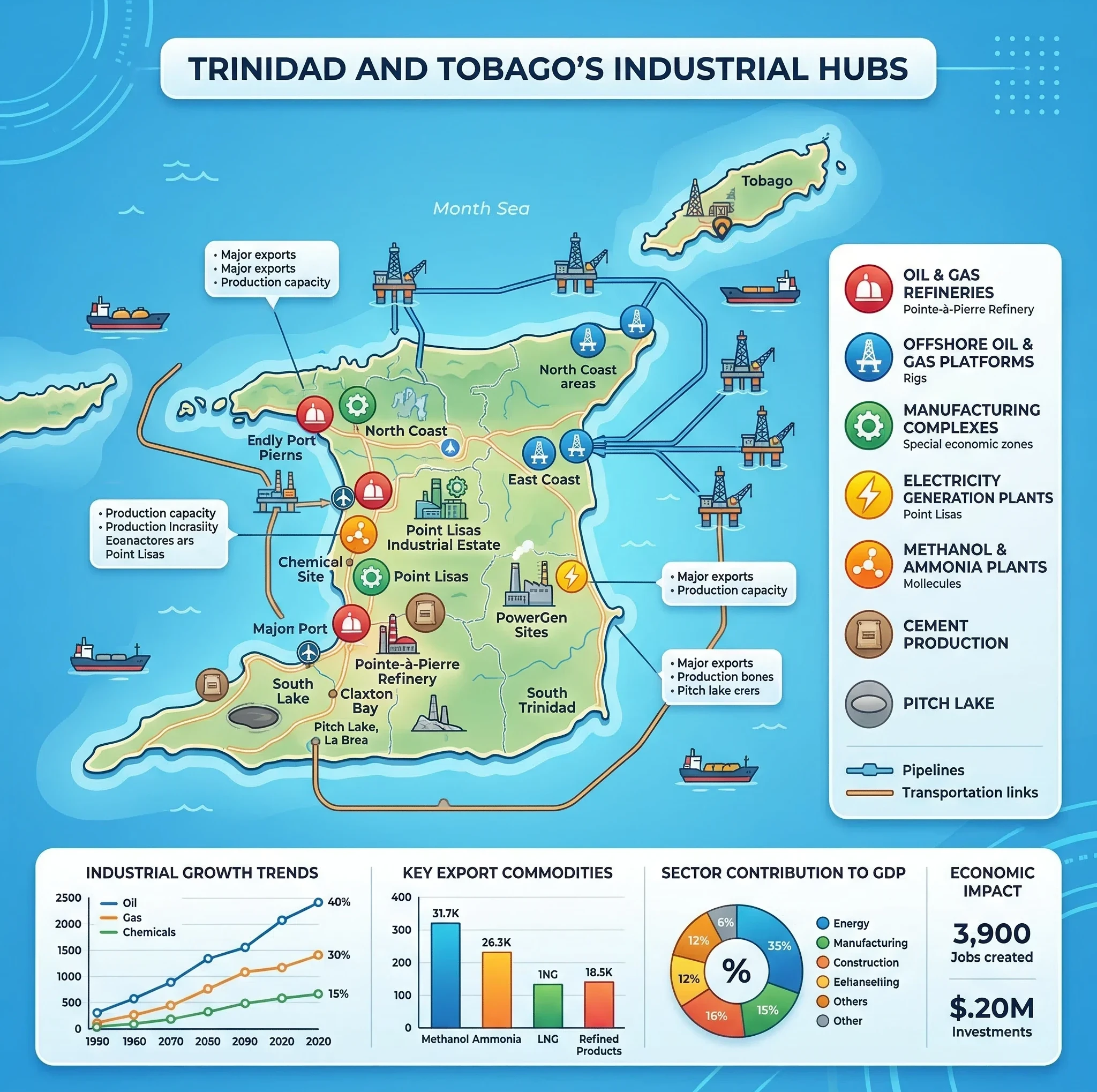
Trinidad and Tobago possesses one of the most developed industrial sectors in the Caribbean.
Its economy includes:
- petroleum refining;
- petrochemicals;
- fertilizer production; and
- plastics manufacturing
The country’s industrial sector contributes approximately 12% of its GDP, supported by its large energy resources.
This has allowed Trinidad and Tobago to become a regional exporter of energy-based products.
Dominican Republic: Manufacturing and Tourism
Dominican Republic has developed a mixed economic structure that includes:
- tourism
- manufacturing
- ferronickel mining
The country has also created free trade zones that attract international manufacturers and export-oriented industries.
Jamaica: Resource-Based Industry
Jamaica is known for its bauxite mining and alumina processing, which form the backbone of its industrial sector.
Bauxite is a key raw material used to produce aluminum, making Jamaica an important supplier to global markets.
Guyana: Rapid Industrial Growth Through Oil
Guyana has recently experienced a dramatic economic transformation due to large offshore oil discoveries.
Oil production has significantly increased national income and productivity levels, potentially allowing Guyana to develop a broader industrial base in the coming decades.
Barbados: Technology and Services
Barbados has focused less on heavy industry and more on:
- financial services
- information technology
- communications infrastructure
This strategy reflects a shift toward knowledge-based economic development rather than traditional manufacturing.
Productivity Challenges
Despite progress in some sectors, productivity across the Caribbean remains relatively low compared with advanced economies.
In 2023, labor productivity in the region averaged roughly 46% of the level observed in OECD economies.
Lower productivity often results from:
- limited industrial diversification
- small domestic markets
- reliance on imported inputs
Improving productivity remains one of the region’s most significant economic challenges.
The Problem of Early De-Industrialization
Some economists argue that Caribbean economies experienced early de-industrialization or never fully industrialized in the first place.
Several historical factors contributed to this situation.
Colonial Economic Structures
During the colonial period, Caribbean economies were structured primarily around plantation agriculture, producing commodities such as sugar, coffee, and cocoa for export.
These economic models discouraged the development of local manufacturing industries.
Post-Independence Policy Priorities
After independence, many Caribbean nations focused on tourism development and service industries rather than building large manufacturing sectors.
While tourism generated employment and foreign exchange, it also limited incentives for industrial expansion.
Major Challenges to Industrial Growth
Several structural obstacles continue to limit industrial development in the Caribbean.
High Energy Costs
Many Caribbean countries rely heavily on imported fossil fuels for electricity generation.
As a result, electricity costs in the region are often among the highest in the world, making manufacturing operations less competitive.
Small Market Size
Most Caribbean nations have relatively small populations.
This limits the ability of businesses to achieve economies of scale, making it difficult to compete with larger manufacturing economies.
Climate Vulnerability
Caribbean countries frequently face hurricanes and other natural disasters.
These events can:
- damage infrastructure
- disrupt supply chains
- discourage long-term industrial investment
Climate risk remains a major concern for investors considering large manufacturing projects.
Green Energy and Industrial Modernization
Recognizing these challenges, several Caribbean countries are exploring renewable energy initiatives and industrial modernization strategies.
Renewable Energy Development
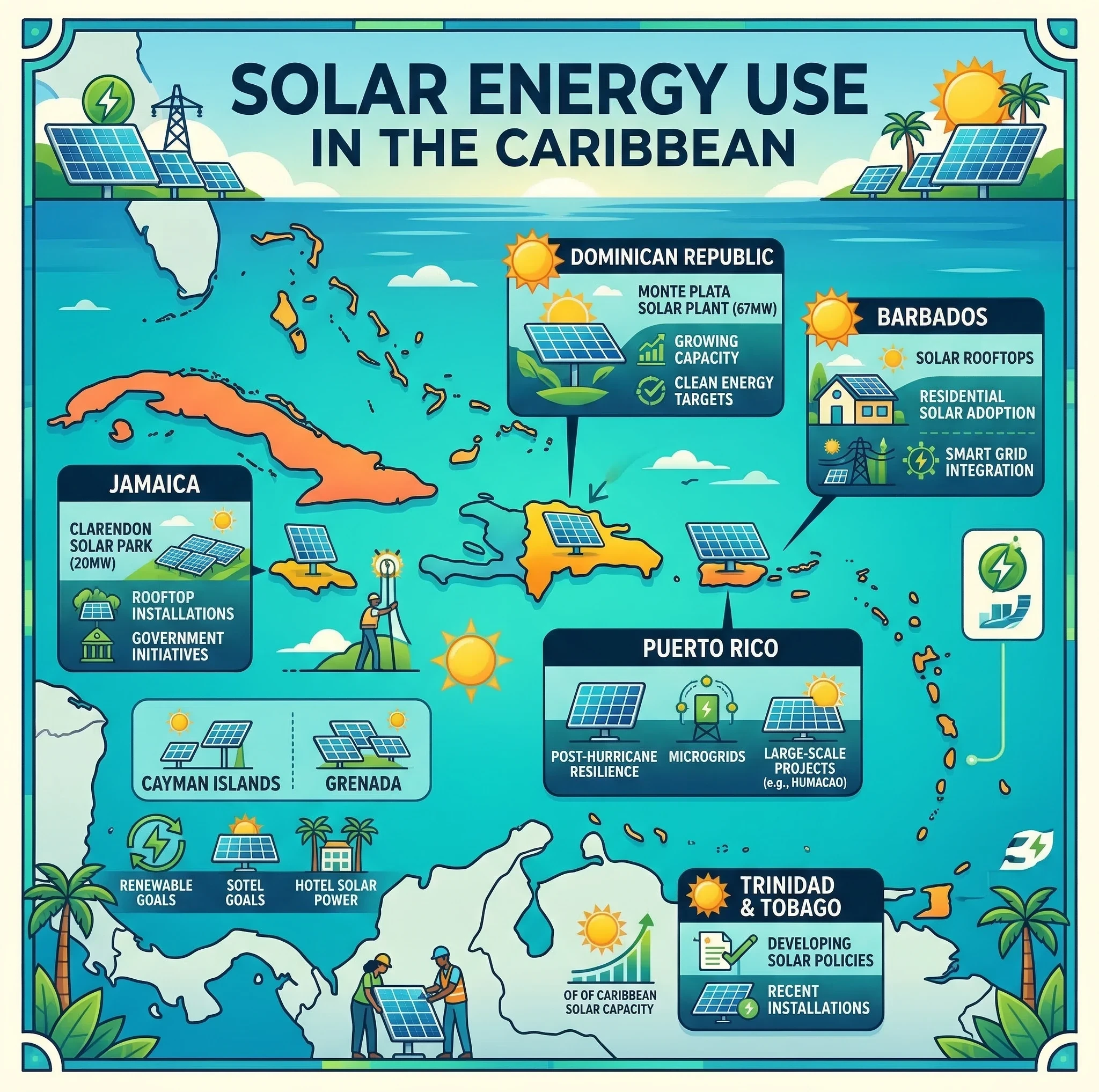 Countries such as Barbados and Jamaica are expanding investments in:
- solar energy
- wind power
- energy efficiency
Reducing energy costs could make local manufacturing more competitive.
Energy Transition in Trinidad and Tobago
Trinidad and Tobago is exploring ways to diversify its energy sector by investing in:
- hydrogen fuel technologies
- carbon capture initiatives
- cleaner industrial processes
These efforts aim to maintain its industrial leadership while adapting to global environmental pressures.
Regional Integration and Trade
Organizations such as Caribbean Community (CARICOM) promote regional economic integration.
Greater cooperation among Caribbean states may help create:
- larger shared markets;
- stronger supply chains; and
- improved industrial collaboration.
The Best Path Forward for Caribbean Industrial Development
While large-scale manufacturing may remain limited, the Caribbean has several promising development opportunities.
Green Energy Industries
Renewable energy can reduce electricity costs and support sustainable economic growth.
Digital and Technology Services
Investments in technology infrastructure could allow Caribbean nations to compete in global digital industries.
Specialized Manufacturing
Rather than competing with large industrial economies, Caribbean countries may focus on niche manufacturing sectors.
Regional Collaboration
Greater economic cooperation across Caribbean nations can help overcome the limitations of small domestic markets.
Final Thoughts
The Caribbean’s level of industrialization remains relatively modest compared with major global economies. However, the region is not without opportunities.
Countries like Trinidad and Tobago, Guyana, and Dominican Republic demonstrate that strategic investments in natural resources, technology, and infrastructure can support industrial growth.
Looking ahead, the most successful development strategies will likely combine:
- renewable energy
- technological innovation
- regional economic integration
By addressing structural challenges and embracing new opportunities, the Caribbean can gradually strengthen its industrial base while building a more resilient and diversified economy.