
For years businesses believed customers moved through a clean, predictable buying journey.
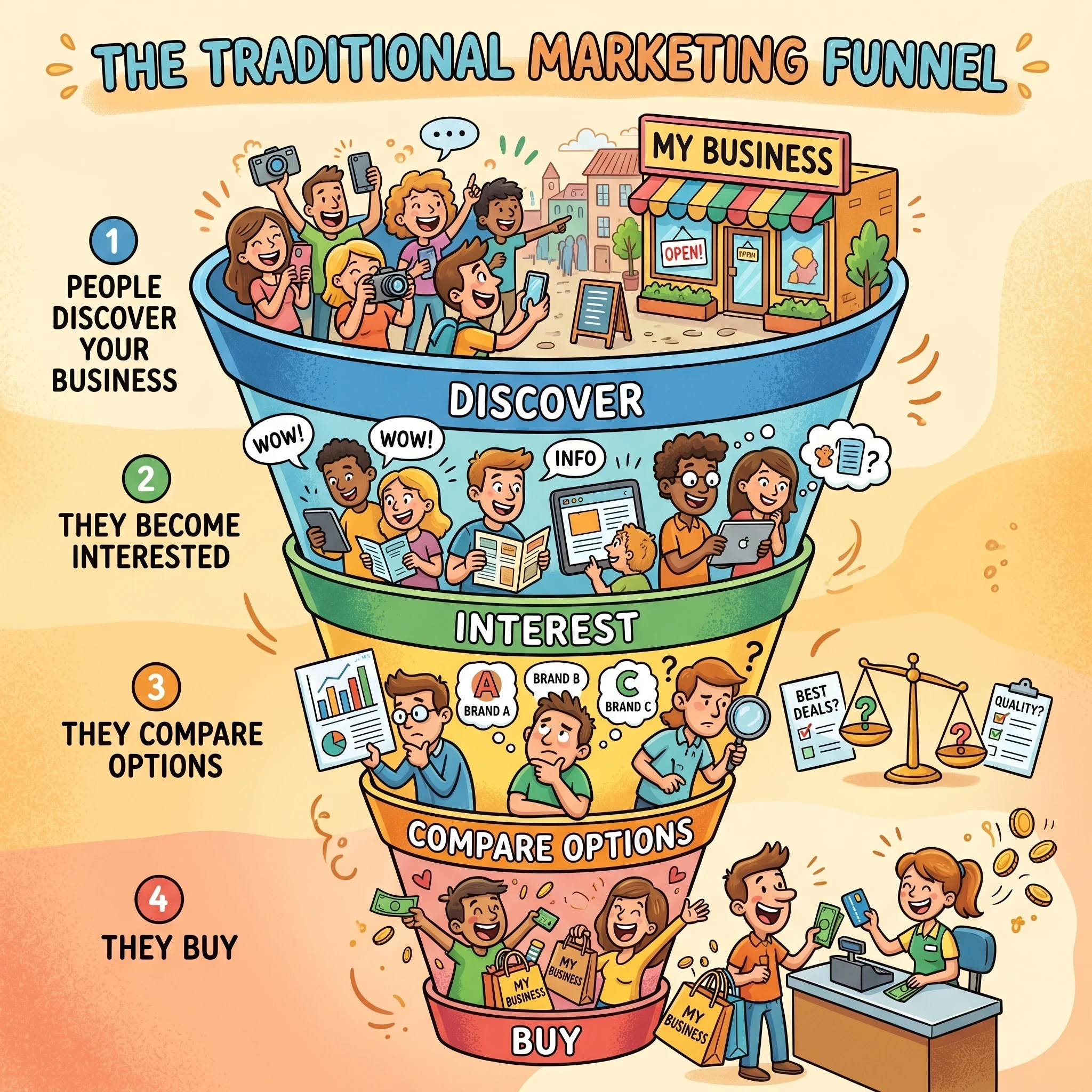 The Traditional Marketing Funnel
The idea was simple:
👉 People discover your business; then
👉 They become interested; and
👉 They compare options; some time after
👉 They buy.
Neat.
Logical.
Orderly.
Unfortunately…
modern consumers behave nothing like that anymore.
Today’s customers bounce between:
- Google searches;
- AI-generated answers;
- YouTube reviews;
- Reddit discussions;
- social media comments;
- niche communities;
- influencer recommendations; and
- Amazon reviews.
before making even the smallest purchase decision.
Modern online marketing has evolved into what many now call:
The Messy Middle
And understanding this shift may be one of the most important survival skills for online businesses today.
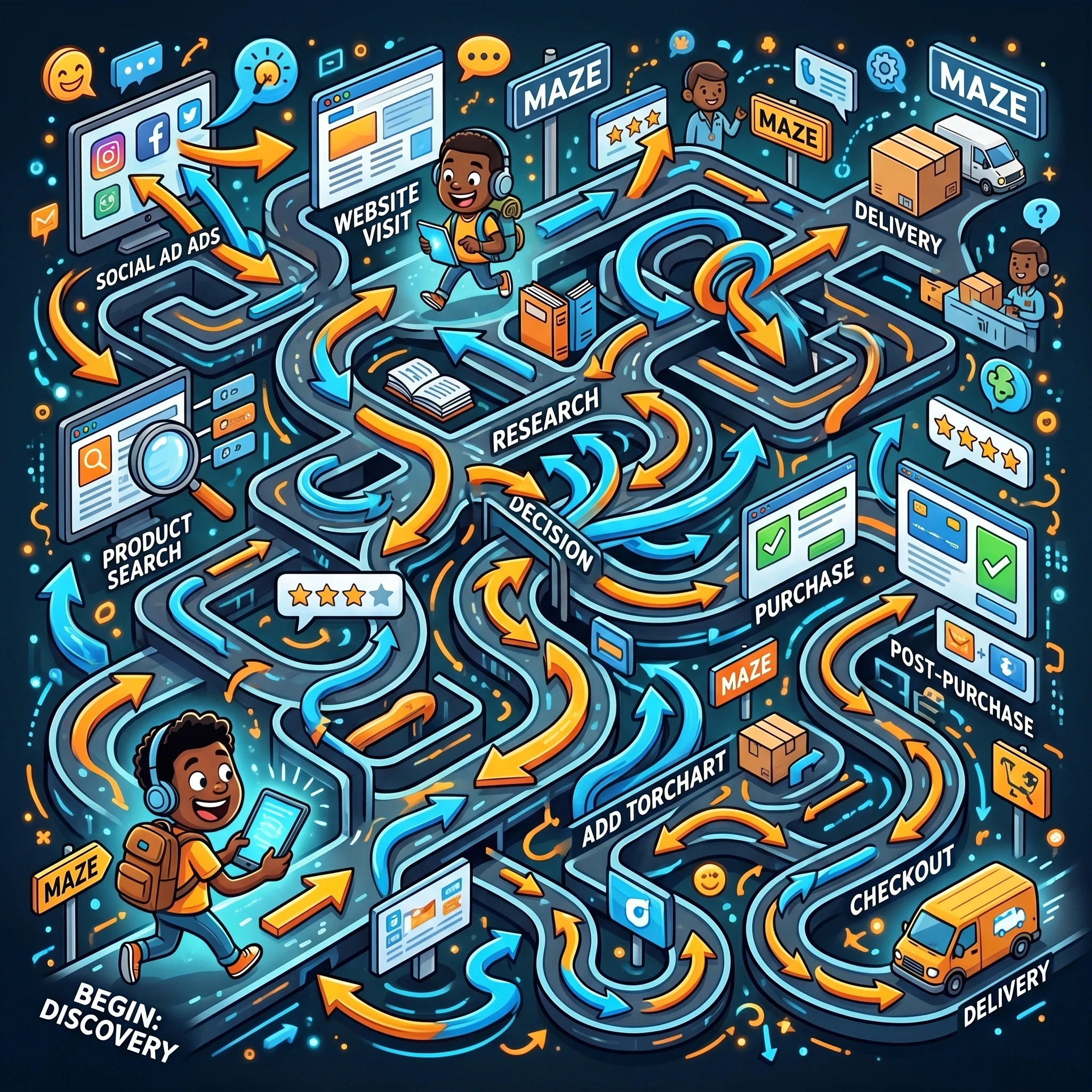 “Digital customer journey maze with arrows moving everywhere”
The Death of the Straight-Line Funnel
The traditional marketing funnel assumed linear behavior.
Modern buyers are highly non-linear.
They continuously move between:
- exploration;
- validation;
- comparison;
- skepticism; and
- community confirmation.
before purchasing.
Today’s Customer Journey
[Social Discovery] → [AI Search Engines] → [Communities]
↓ ↑ ↓
[Google Search] ← [Reviews & Comments] → [Purchase]This creates:
- fragmented attention;
- longer decision cycles;
- platform hopping; and most importantly
- higher trust requirements.
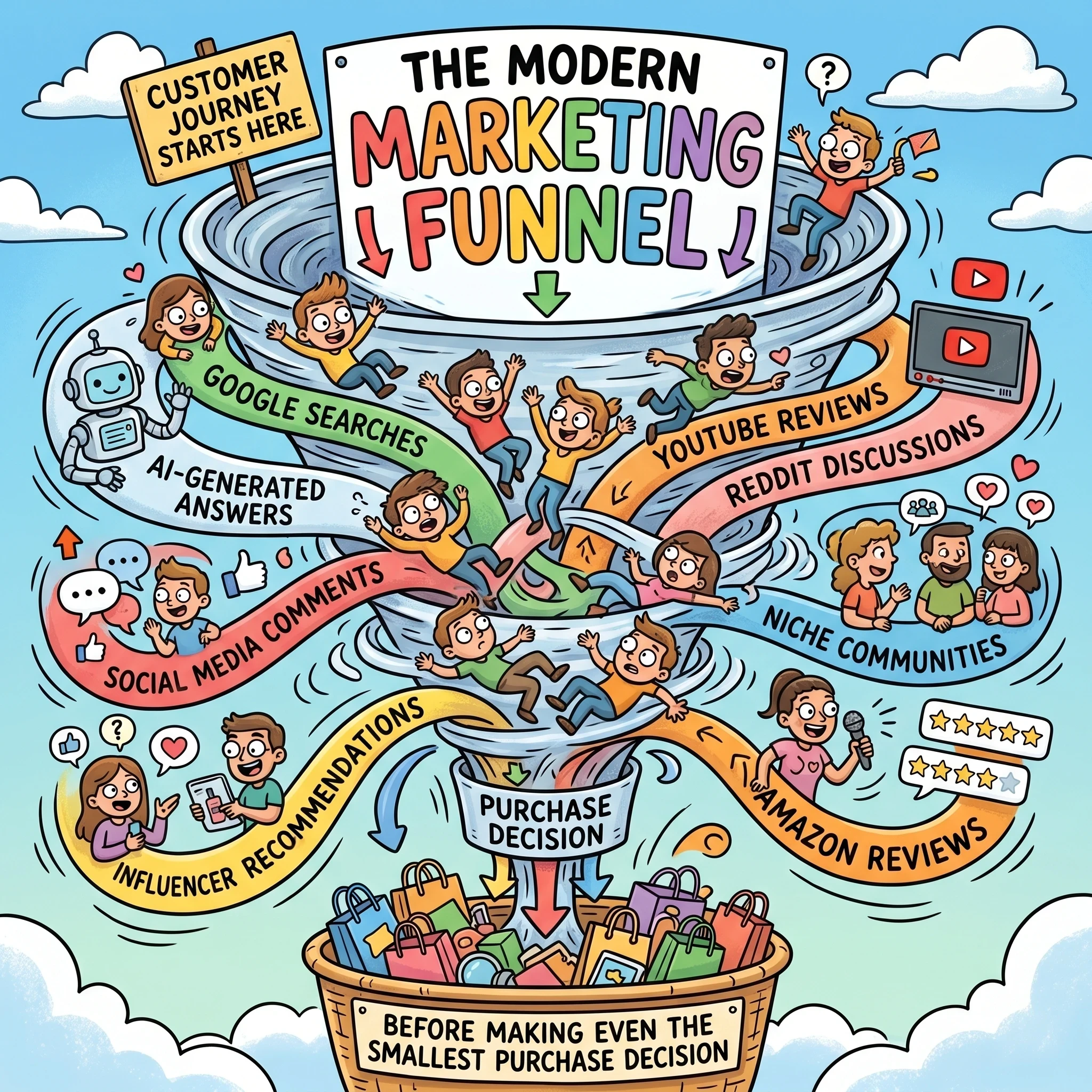 “The Modern Marketing Funnel”
Why Many Beginners Fail Online
Many beginners hear advice like:
- “Know your audience”
- “Build your brand”
- “Create authority”
But they are rarely shown HOW to operationalize these ideas into repeatable systems.
That gap causes:
- inconsistency;
- burnout;
- confusion; and
- random content creation.
without strategic direction.
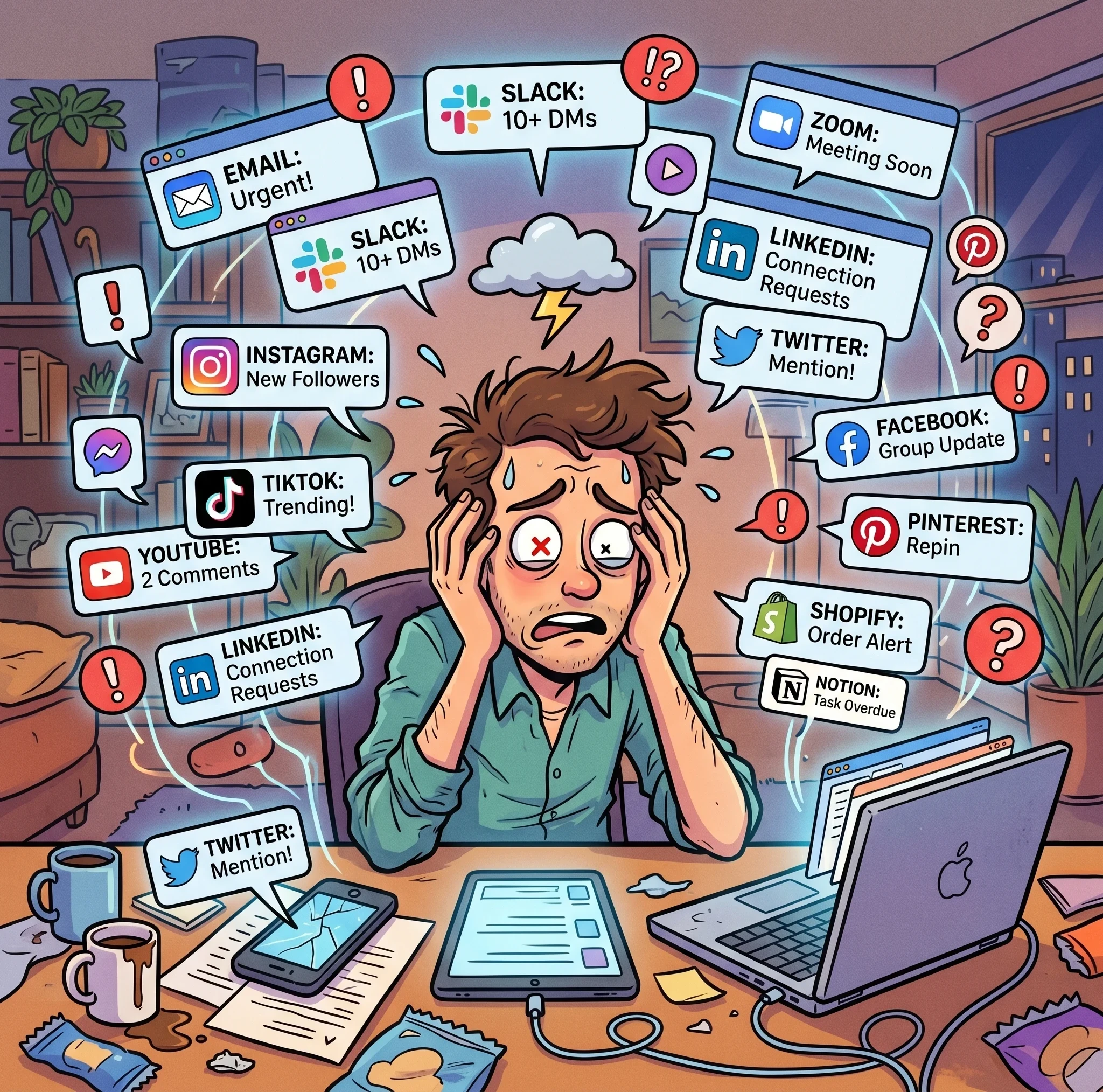 “Overwhelmed entrepreneur surrounded by platforms and notifications”
How to Operationalize Audience Research
Modern audience research requires more than just demographics.
Businesses now need:
👉 live behavioral insights.
Practical System
Step 1 — Research Real Conversations
Use:
- Reddit;
- Quora;
- YouTube comments;
- Facebook groups; or
- Amazon reviews.
Look for:
- frustrations;
- emotional wording;
- repeated questions; and
- buying concerns.
Step 2 — Create an Audience Database
Track:
- common objections;
- audience language;
- recurring pain points; and
- emotional triggers
Use:
- Notion;
- Airtable; or
- simple spreadsheets.
Step 3 — Use AI Analysis
AI tools can help identify:
- anxiety patterns;
- urgency triggers;
- emotional motivators; and
- hidden customer intent.
This will improve:
- content strategy;
- messaging;
- SEO targeting; and
- conversion optimization.
How to Operationalize Branding
Branding is not simply:
- logos; or
- colors; or
- graphics.
Branding is:
👉 repeated recognition and trust.
Simple Branding Structure
Define 3 Core Content Pillars
Example:
- SEO education;
- AI marketing; and
- online business systems
Create Consistent Brand Standards
Maintain:
- consistent tone;
- colors;
- typography; and
- messaging style
This strengthens audience familiarity over time.
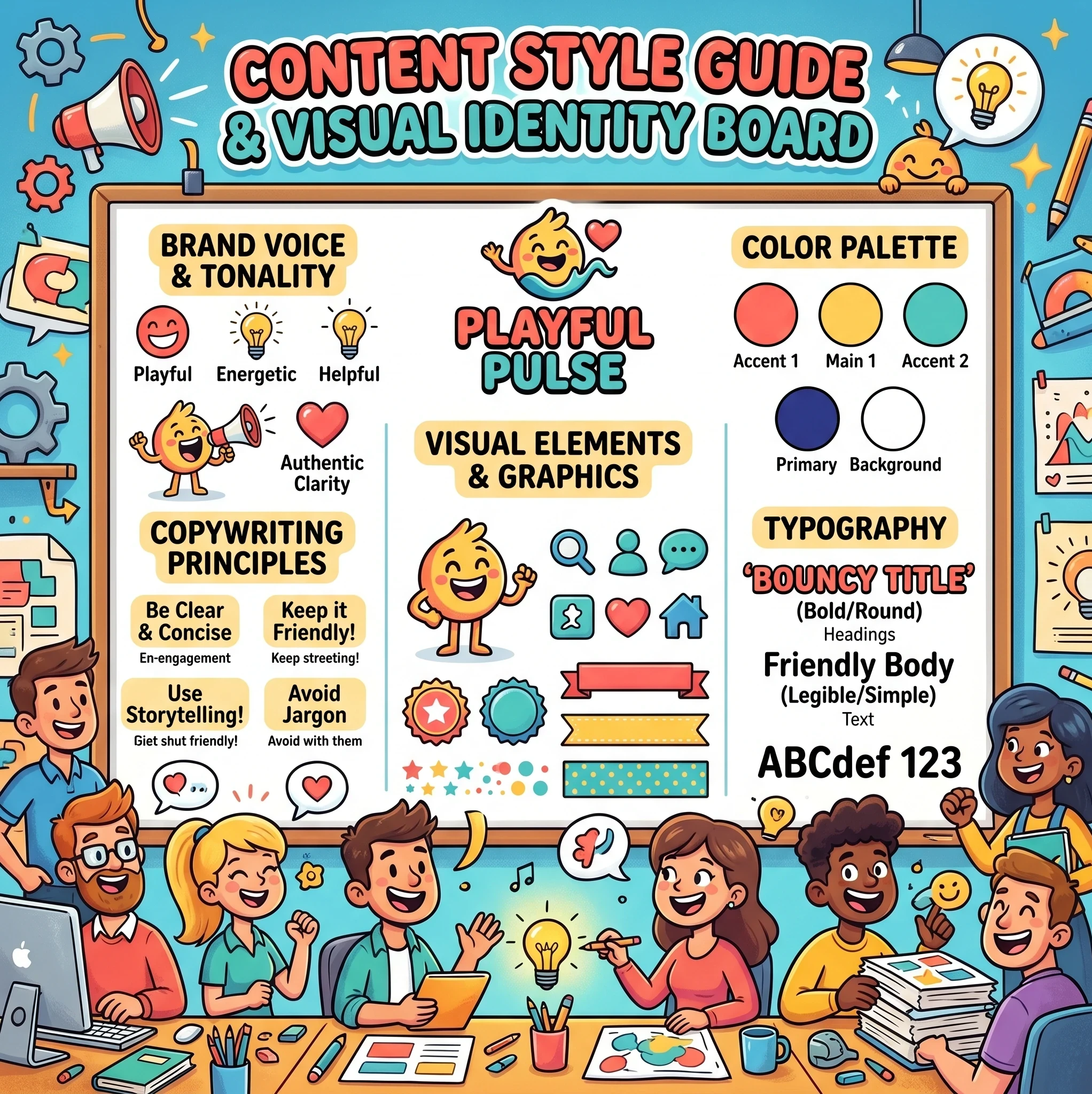 “Professional content style guide and visual identity board”
The Smarter Omnichannel Strategy
Many businesses misunderstand omnichannel marketing.
Being everywhere simultaneously is not sustainable.
Instead:
Create One Foundational Asset
Example:
- one detailed article
Then repurpose it into:
- Pinterest pins;
- short videos;
- email sequences;
- FAQs; and
- social posts.
This creates:
- efficiency;
- consistency;
- wider visibility; and
- reduced burnout.
Why This Matters in the AI Era
AI search engines increasingly summarize information directly.
This means businesses now compete on:
- authority;
- structured knowledge;
- consistency;
- trust signals; and
- discoverability across platforms.
The future belongs less to aggressive promotion…
and more to sustainable information ecosystems.
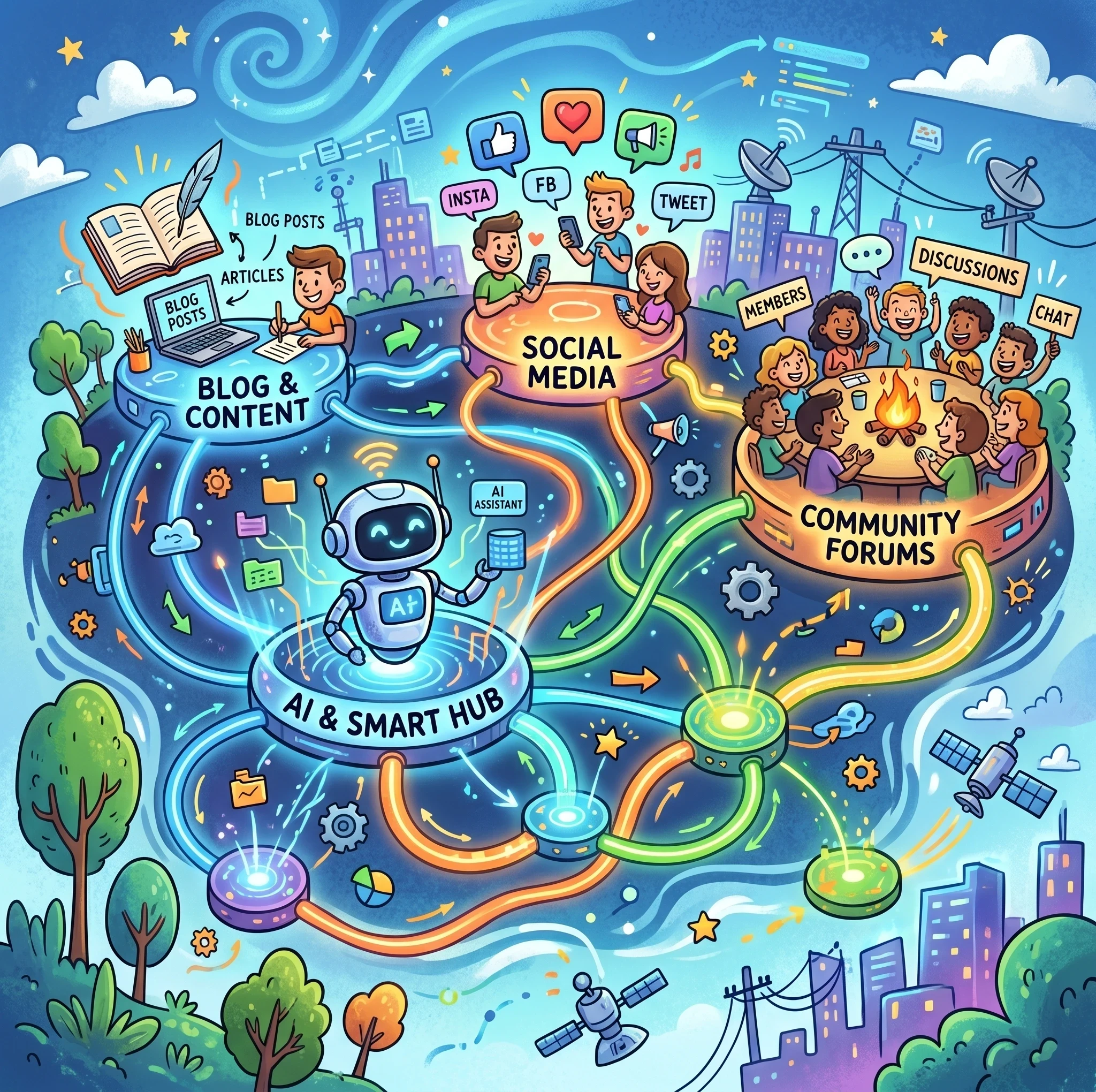 “Connected digital ecosystem showing blog, AI, social media, and community links”
Affiliate Disclaimer
This article may contain affiliate links. If you purchase through these links, I may earn a commission at no additional cost to you.
Amazon Disclaimer
As an Amazon Associate, I earn from qualifying purchases.
Final Thought
Modern online marketing is no longer about controlling a simple funnel.
It is about building:
- visibility;
- consistency;
- authority; and
- interconnected trust.
across multiple digital environments.
The businesses that survive long term will not necessarily be the loudest.
They will be the most recognizable,
the most helpful, and
the easiest to rediscover throughout the customer journey.
🚀 Call to Action
If you want to learn:
- SEO;
- website building;
- affiliate marketing;
- AI content systems; and
- digital business strategy.
then explore
Wealthy Affiliate
because sustainable systems outperform chaotic hustle over the long run.
Hi there,
I think your article explains something a lot of businesses are starting to notice but don’t always want to admit: people don’t move through online buying decisions in a clean straight line anymore. Most of us jump between reviews, YouTube videos, Reddit threads, social media, and search results before buying anything.
The part about trust and repeated exposure mattered more than the old “step-by-step funnel” idea really made sense to me. I’ve caught myself doing exactly that with products I’ve bought recently.
Do you think the traditional funnel is completely outdated now, or does it still work in some industries where buying decisions are simpler or more impulse-driven?
Kind regards,
Boris
Hello Boris
Apologizes for the delay, was off in NYC helping my daughter organizing her move to Mississippi.
The simple answer to your question is a resounding yes. The traditional sales funnel is outdated because it treats customers as an afterthought rather than an engine for growth. Today’s buyers are highly autonomous, skeptical of traditional marketing, and heavily influenced by peer reviews and word-of-mouth.
Here are the main reasons why the Traditional Funnel has failed
– The Linear assumption: Buyers do not move in a straight line from awareness to purchase.
– Dead-end design: The funnel drops customers out of the bottom once they buy.
– Cost inefficiency: The funnel requires constant, expensive reinvestment to acquire new top-of-funnel leads.
– It ignores retention: It fails to account for customer lifetime value and repeat purchases; and
– Misaligned teams: It isolates marketing, sales, and customer success into separate silos.
Its modern replacement is The Flywheel. The flywheel model places the customer at the center of the business strategy. Instead of losing momentum at the bottom of a funnel, customer satisfaction feeds directly back into attracting new prospects.
Thanks, appreciate your question and your input. ^_^ Cheers
Paul